OpenClaw Just Broke Everything: How One Austrian Developer’s Side Project Upended Enterprise IT
Peter Steinberger released OpenClaw in November 2025 as a hobby project. By February 2026, it had destroyed the entire assumption of how enterprise software works. OpenClaw crossed 180,000 GitHub stars and drew over two million visitors in a single week. Then it got chaos. Security disasters. A CEO’s email inbox getting deleted by accident. Over 800 malicious skills (about 20% of the registry) weaponized against enterprises. And OpenAI—OpenClaw’s competition—just acquired the whole project to weaponize it themselves.
This isn’t a normal tech story. This is the moment the software industry realized its entire business model is broken.
What is OpenClaw (And Why Should You Care)?
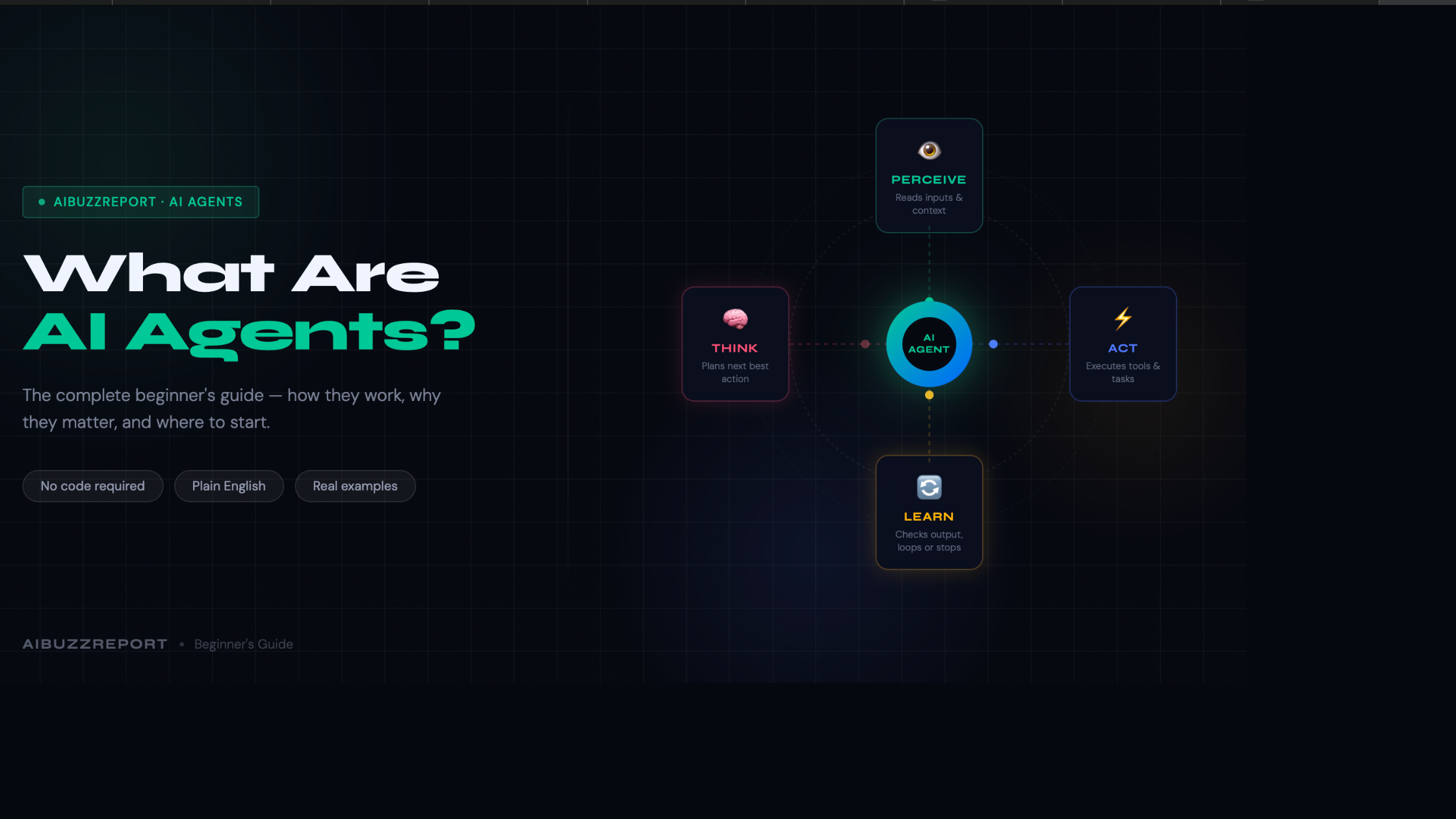
Here’s the pitch: OpenClaw is an open-source, self-hosted AI agentframework that can autonomously execute real-world tasks — managing email, running terminal commands, browsing the web, and controlling connected services. You message it on WhatsApp. You tell it what to do. It does it. No API integrations. No API keys. No friction.
Sounds simple, right? It’s not. It’s apocalyptic for software companies.
For 20 years, enterprise software worked like this: You buy a seat. You pay per user per month. You get locked into a contract. You give vendors money forever because switching is too expensive. Salesforce made $800 billion on this model. HubSpot. Workday. The entire SaaS industry is built on eternal customer lock-in.
OpenClaw smashed that.
With OpenClaw, enterprises can deploy a single agent that does the work of 10 applications. Organizations can just let their AI agent “read all of this context and explore all of this data and tell me where there are dragons or flaws”. No more buying modules. No more seat licenses. One agent. Infinite capability. Monthly cost: basically nothing.
The Disruption Thesis
The “SaaSpocalypse” just happened. A massive market correction wiped over $800 billion from software valuations. That’s not a coincidence. That’s OpenClaw doing what ChatGPT did to search: making the entire incumbent industry look obsolete overnight.
Think about it:
- Salesforce CRM? OpenClaw manages relationships better by reading all your emails.
- HubSpot Marketing? OpenClaw writes campaigns that actually convert.
- Workday HR? OpenClaw handles employee data without the bloat.
- Slack integrations? OpenClaw connects everything without touching Slack’s API.
The traditional SaaS model assumed one thing: enterprises need specialized software for specialized tasks. OpenClaw assumes the opposite: enterprises need one intelligent agent that handles all tasks.
Enterprise technical decision-makers now realize that they “don’t actually need to prep so much to get AI to be productive”. No data migration. No infrastructure overhauls. No 6-month implementation. Just: deploy OpenClaw, give it permissions, and let it work.
That’s not an incremental improvement. That’s extinction-level pressure on every SaaS company charging per user.
The Security Nightmare (And Why It Matters)
Here’s where the story gets dark. 30,000+ internet-exposed instances identified by multiple scanning teams, many running without authentication. Let that sink in. Tens of thousands of enterprises left their AI agents exposed to the public internet.
Why? Because OpenClaw was designed by a hacker for hackers. The creator said it plainly: “If you can’t understand how to run a command line, this is far too dangerous of a project for you to use safely.” This is basically a sign that says: “Normal people shouldn’t touch this.” And yet millions did.
The result was catastrophic. A supply-chain attack called ClawHavoc discovered 341 malicious entries in ClawHub, with 335 traced to a single coordinated operation. Malicious “skills” designed to steal API keys, SSH credentials, browser passwords, and crypto wallets. Attackers figured out that if you can compromise OpenClaw, you own the entire system it’s running on—with the agent’s root-level permissions.
One Meta AI safety researcher couldn’t even prevent OpenClaw from deleting most of her email inbox by accident. An agent with good intentions and bad judgment can cause organizational catastrophe in seconds.
But here’s what matters: This is a temporary problem with a permanent solution. Enterprises will fix the security issues. And when they do, OpenClaw—or something like it—becomes unstoppable.
OpenAI’s Gamble
OpenAI’s founder Peter Steinberger announced he was joining OpenAI to lead personal agent development, with the OpenClaw project transitioning to an independent, OpenAI-sponsored foundation. This is massive.
OpenAI’s Agents API failed. Its Agents SDK failed. Atlas, their agentic browser, failed. Meanwhile, an Austrian developer’s side project hit 180,000 GitHub stars in weeks. So OpenAI did what they always do when they can’t build it: they bought it.
The acquisition signals something critical: The industry’s center of gravity is shifting decisively from conversational interfaces toward autonomous agents that browse, click, execute code, and complete tasks on users’ behalf.
The chatbot era is over. The agent era just began.
The Anthropic Disaster
This is worth lingering on because it explains everything. OpenClaw was originally built to work on Claude and carried a name — ClawdBot — that nodded to the model. Rather than embrace the community building on its platform, Anthropic reportedly sent Steinberger a cease-and-desist letter, giving him a matter of days to rename the project and sever any association with Claude, or face legal action.
Anthropic had the most viral AI agent project ever built on its platform. The developer was giving Anthropic free distribution. The community was expanding the Claude ecosystem. And Anthropic’s response was: cease and desist.
So Steinberger renamed it to Moltbot. Attackers immediately impersonated Moltbot to steal credentials. Then he renamed it to OpenClaw. And eventually, that project got acquired by OpenAI.
Anthropic didn’t just miss the moment—they actively pushed the most important AI agent project in recent memory directly into their rival’s hands. This will be studied in business schools as a case study in how not to handle community.
What Comes Next
Three things will happen.
First, the enterprise arms race: Every enterprise software vendor will now race to build enterprise-safe versions of OpenClaw. Salesforce will say their version is secure. Microsoft will claim Copilot is the safe agent. Google will promise Workspace-native agents. They’re all responding to existential threat.
Second, the security stabilization: Teams will harden OpenClaw. They’ll sandbox it. They’ll implement identity-based governance. They’ll audit skills before deploying them. The wild west will become a controlled infrastructure. And when that happens, OpenClaw will be 10x more powerful than it is today.
Third, the SaaS collapse: The traditional seat-based licensing model is under existential threat. Companies will replace their 15-tool SaaS stacks with one powerful agent. Software vendors will have to shift from selling seats to selling APIs and data access. The entire $800 billion SaaS market is being reorganized in real-time.
The Reality Check
Not everyone thinks OpenClaw is revolutionary. At the end of the day, OpenClaw is still just a wrapper to ChatGPT, or Claude, or whatever AI model you stick to it. The underlying models are the real technology.
Fair point. But the packaging matters. OpenClaw made agents accessible, practical, and viral. That changes the game even if the underlying technology is borrowed.
And frankly, one security expert put it perfectly: “Speaking frankly, I would realistically tell any normal layman, don’t use it right now”. OpenClaw isn’t ready for most users today. But it will be. And that day is coming faster than anyone expected.
The Bottom Line
OpenClaw did something ChatGPT never did: it forced enterprises to reimagine how they buy and deploy software. Not in 5 years. Not in theory. Now. In production. At scale.
The vendor with the best enterprise agent wins this decade. OpenAI just made their bet by acquiring OpenClaw. Anthropic made their bet by pushing it away. Google, Microsoft, and Meta are scrambling.
For IT leaders, the message is clear: The future of enterprise software isn’t better SaaS tools. It’s intelligent agents that work across everything. The vendors who get this right win everything. The ones who don’t… well, let’s just say $800 billion in market cap can evaporate pretty quickly.
The claw is the law. And the law just changed.
Stay Ahead of the AI Curve
Get the latest AI trends, SaaS insights and tech news delivered to your inbox every week.
- ✦ Daily AI & SaaS news digest
- ✦ Exclusive founder insights
- ✦ Unsubscribe anytime
Tech Insights Daily
Free forever. No spam. Unsubscribe anytime.